
Judith Wood: Demonstrating a Lifelong Commitment to Justice and Legal Excellence
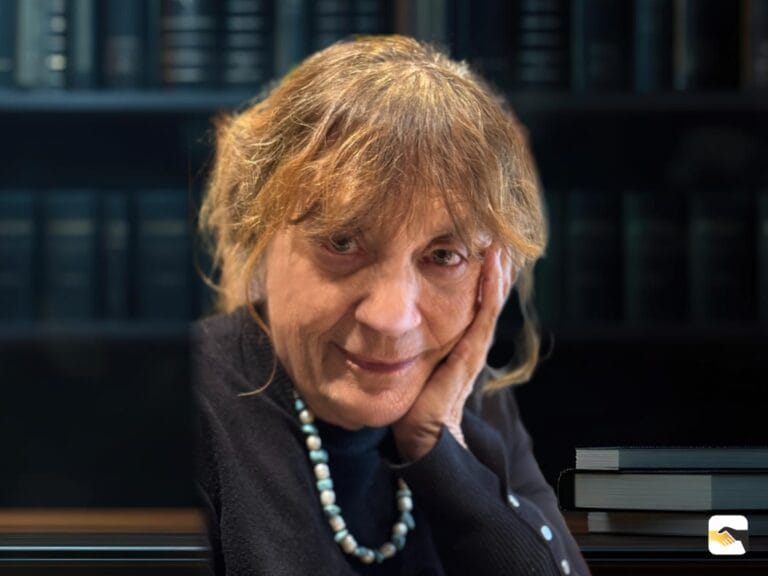
Law shapes societies by defining justice, protecting rights, and creating accountability. Few professionals combine legal precision with genuine empathy as effectively as those working in immigration and human rights law. Their efforts unite policy expertise with compassion, offering dignity and hope to individuals seeking fairness across shifting global borders.
Judith Wood is one such leader. Her inspiration to pursue law was shaped by Benjamin B. Ferencz, a prosecutor at the Nuremberg Trials, who warned that without effective world law, “the same cruel mentality that made the Holocaust possible might one day destroy the entire human race.” His words became the moral foundation of her career, guiding her to use law as a tool to confront injustice and protect the vulnerable.
Judith’s path was far from conventional. Entering Pepperdine University School of Law as a single mother on the brink of divorce, she found strength in professors who were, as she recalls, “exceptionally compassionate in their nature when teaching law.” They taught her that precision and empathy are not opposites but partners in achieving justice—a principle that defines her practice today.
Since founding the Law Offices of Judith L. Wood in 1984, she has focused on removal defense and asylum. In 1993, she established the Human Rights Project to extend her mission, initially advocating for immigrants and refugees who had suffered torture and later expanding to defend the rights of women and children. Over four decades, her work has evolved from individual representation to systemic advocacy, yet her guiding belief remains unchanged: justice must be pursued with both intellect and compassion to preserve humanity’s shared dignity.
A Calling, Not a Choice
Immigration law and international human rights form the foundation of Judith’s life’s work—fields she believes chose her rather than the other way around. From the very start of her career, she feels deeply connected to the people she represents. She recalls meeting women from Central America who, as she says, “worked their fingers to the bone to support their children back home, and they didn’t have one ounce of self-pity.” Their courage, even in the harshest conditions, shapes her perspective and strengthens her purpose. “They demonstrated faith greater than my own,” she reflects, acknowledging how their resilience continues to inspire her every day.
For Judith, this work is a mutual exchange of strength and hope. She states, “This work creates a symbiotic relationship; while I fight for their legal right to safety, their courage and resilience fortify my spirit and renew my purpose daily. This dynamic transforms the emotional weight of the work into a sustainable, motivating force.”
Alongside this personal connection, she embraces the intellectual rigor of immigration law. She identifies a significant shortfall in U.S. asylum law, which does “not explicitly address gender as grounds for asylum,” and recognizes the need for reform. Determined to change this, she pioneers the use of international human rights principles to influence domestic asylum cases, ensuring that U.S. law aligns with global standards of justice. She shares, “It was a novel approach at the time, but it felt like a necessary and logical extension of our country’s legal and moral obligations.”
Founding the Human Rights Project marks her commitment to bridging that critical gap—bringing global injustices into national awareness and empowering victims through the law. Her journey reflects the balance between empathy, intellect, and action in pursuit of justice.
Justice as a Living Principle
To Judith, justice is not an abstract concept but an active pursuit—a verb that demands daily effort. It represents the ongoing work of turning the nation’s promise of “With Liberty and Justice for All” into a lived reality for those systematically excluded from it. Her view of justice evolves over time.
In her early career, it meant securing asylum for families fleeing violence, preventing deportations, and winning appeals—each case meant a meaningful step toward fairness. The turning point arrived with the landmark case later portrayed in the film Saint Judy. In defending Asefa Ashwari, an Afghan teacher persecuted for educating girls, Judith realized that the law itself often stands in the way of justice. She understood that winning the case is not enough; she must change the law. When the U.S. Court of Appeals for the Ninth Circuit recognized persecuted women as a protected class, she experienced profound clarity—justice transforms from saving one life to establishing a precedent that saves thousands.
Today, Judith expands her mission through systemic advocacy. She writes articles to confront the erosion of asylum rights, speaks at legal conferences to educate peers, and leads the Federal Bar Association’s International Human Rights Law section to influence national policy. Justice, for her, also means truth-telling—creating courtroom spaces where her clients’ emotional truths are heard, believed, and validated.
Centering Culture in Every Case
Cultural sensitivity begins with a simple truth—the client is the expert on their own life. Judith’s role as an attorney is to listen with humility and learn from each person’s lived reality. She moves beyond words to grasp the cultural context that shapes how people experience and share their stories.
The case of Asefa Ashwari exemplifies this approach. Asefa’s reluctance to discuss the sexual assault she suffered stemmed from deep cultural norms of honor and shame. When the judge asked, “Why did you keep lying?” her quiet answer, “Because my brothers would have killed me,” revealed the vital context behind her silence.
Judith believes true advocacy rejects rigid frameworks. She encourages clients to express raw, authentic emotion, ensuring their testimony reflects their truth rather than conforming to Western detachment. For her, genuine justice begins by meeting clients where they are and translating their humanity within the legal system.
Language as a Tool of Empowerment in Law
Judith says language forms the foundation of trust, and in trauma-informed legal work, trust defines everything. Her firm’s ability to communicate in multiple languages—Arabic, Spanish, French, Russian, Farsi, Armenian, and more—is not a matter of convenience but a deliberate and vital part of their philosophy. When she speaks to a client in their native language, she does more than share information; she communicates respect. She validates identity and culture within a legal system that often feels cold and distant. This connection breaks power imbalances and transforms clients from passive participants into active partners in their defense.
Direct communication also protects the integrity of a person’s story. The details of persecution, the cultural nuances of danger, and the quiet expressions of fear often disappear in translation. By engaging directly, Judith ensures that every truth remains intact, allowing her team to present cases that are not only legally strong but profoundly human.
The Fight for Fairness
Judith discusses the most urgent challenge lies in the deliberate erosion of asylum protections, both in the United States and across the world. She observes a growing gap between domestic legal practices and international obligations under treaties like the 1951 Refugee Convention.
This issue carries life-or-death consequences for the people she represents. In her published work, including Erosion of Women’s Rights in U.S. Immigration Cases, she critiques the Board of Immigration Appeals for imposing restrictive requirements such as “social visibility” and “particularity” to define a “particular social group.” These terms, absent in international law, often create impossible barriers for refugees. “Forcing a person to prove they are visible to their persecutors can be a death sentence,” she states.
To confront these challenges, Judith integrates international treaties and human rights reports in her courtroom arguments and advocates for reform through education, writing, and leadership. The work, she admits, is “much more difficult” now—but she and her team continue with unwavering resolve.
Empathy as Endurance
Empathy is not a finite resource but a renewable force that fuels Judith’s work. She views it as the essence of justice, not a vulnerability. Client testimonials often highlight her “compassion” and “humanism” alongside her “professionalism,” reflecting how she seamlessly unites empathy with excellence.
She draws strength from the resilience and faith of her clients, whose courage in the face of horror restores her perspective and purpose. Grounded in the mission of the Human Rights Project, Judith fights for justice that transcends individual cases. Surrounded by a team that shares her values, she transforms compassion into collective strength and endurance.
Shaping Reform Across Legal Frontiers
Judith discusses that professional affiliations like the Federal Bar Association and the Los Angeles County Bar Association serve as vital platforms for advocacy and reform, not mere credentials.
As a frequent speaker for the FBA, the American Immigration Lawyers Association, and the LACBA, she educates peers and promotes a more humane, internationally aligned approach to immigration law. Her leadership as Chair of the FBA’s International Human Rights Law section places her at the heart of national policy dialogue, driving meaningful change. These associations also offer her a strong professional community, transforming isolation into collaboration and amplifying a unified voice for justice.
What True Influence Looks Like
For Judith, true influence rests on three defining qualities that shape both her work and her impact:
- Tenacity: She relentlessly pursues justice, refuses to accept “no” for an answer, and fights every case to its rightful conclusion. As one client said, she “made the impossible happen.”
- Intellectual Courage: She challenges legal conventions, viewing the law as a living framework that must evolve to meet the demands of justice. Her integration of international human rights law into U.S. asylum cases reflects this courage.
- Profound Empathy: She sees the full humanity behind every case file, believing that “one individual can make a difference… it’s about empowerment.”
Purpose as Anchor
Staying grounded comes from a deep connection to the principles that first drew Judith to law. The moral clarity of the Nuremberg principles guides her as strongly today as forty years ago, serving as her true north. She draws constant motivation from the courage of her clients, whose resilience in the face of unimaginable hardship inspires hope and perspective.
Judith honors a personal promise to approach every case with the intention of achieving the best possible outcome. Apart from work, she balances her life through yoga, swimming, and music, creating spaces for creativity and renewal that sustain her commitment to justice.
Building the Future of Advocacy
The future for Judith focuses on strengthening and expanding the mission of the Human Rights Project. Her goals include:
- Expanding Reach: Continuing to assist as many individuals in need as possible and serving as a beacon of hope for those seeking justice.
- Public Awareness and Reform: Launching campaigns to educate the public and advocating for systemic legal reform.
- Mentorship: Training and inspiring the next generation of human rights attorneys, ensuring the fight for justice continues across generations.
- Legal Advocacy: Persisting in appellate courts and through publications to challenge the erosion of asylum rights and uphold U.S. compliance with international law.
Guiding Principles for the Next Generation of Lawyers
Judith’s message to young attorneys is clear and unwavering: never underestimate the power of one individual. She believes every lawyer can make a difference, challenge injustice, and even change the law. As she says, “one individual can make a difference, two individuals fighting together can change the law… keep the fight going, keep… fight through the struggles.”
Her advice centers on three principles:
- Merge Compassion with Rigor: Compassion without excellence is ineffective, and excellence without compassion is hollow. Know every letter of the law and use it to serve humanity.
- Find Your “Why”: Discover a source of motivation deeper than ambition or financial gain. For Judith, it was her family history and the lessons of Nuremberg.
- Persevere: Let purpose anchor you through challenges, sustaining a career devoted to justice and meaningful change.
For Print and Design Purposes
Name: Judith Wood | Attorney At Law
Company: Law Offices Of Judith L. Wood
Quotes:
“Justice is not a static ideal; it is the active, relentless work of ensuring our nation’s promise of ‘Liberty and Justice for All’ extends to every single person, especially those who have been told they don’t belong.”
“My work is built on a lesson from Nuremberg: if we do not devote ourselves to developing effective world law, the same cruel mentality that made the Holocaust possible might one day destroy the entire human race.”
“I want every young lawyer to know that a single person, armed with conviction and compassion, can change the law. You have to be willing to fight through the struggles, because one victory can mean justice for thousands.”
“Empathy is not a weakness that leads to burnout; it is the fuel. We draw strength from our clients’ courage, and in turn, we give their story a powerful voice in the halls of justice.”