
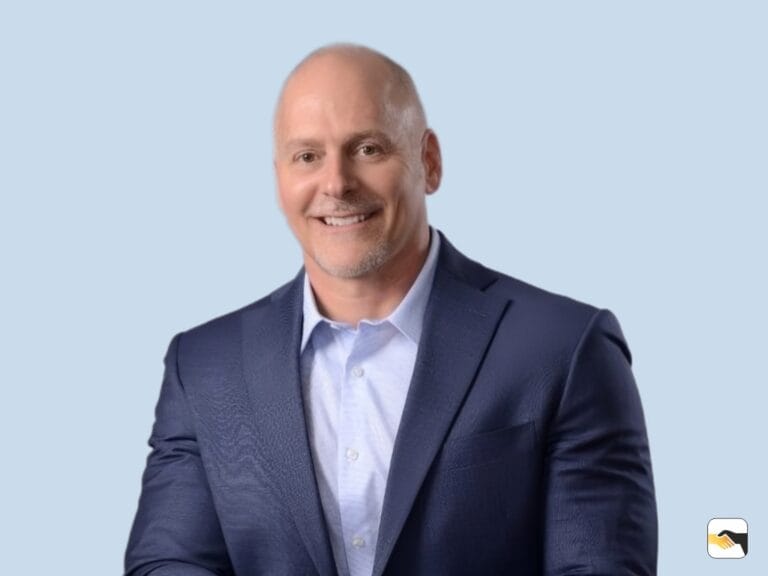
Mark Bunn: Leading Transformational SaaS Initiatives to Unlock New Ways of Working
For much of the early 21st century, the name Nokia was synonymous with mobile phones. Yet, long before the mobile boom—and long after it—the Finnish multinational has been redefining itself. Founded in 1865, Nokia Corporation has built a legacy of pioneering innovation in telecommunication and information technology. Today, the company stands as a global force in networking and digital infrastructure, enabling seamless connectivity between people, machines, and devices across industries.
After exiting the mobile handset business, Nokia turned its focus to networking, private infrastructure, and software. With a continued emphasis on software development, the company has embraced a software-centric future through transformative technologies such as private networking, network exposure, and Software-as-a-Service (SaaS). At the forefront of this evolution is Mark Bunn, Senior Vice President of SaaS Business Operations within Nokia’s Cloud and Network Services unit. Drawing from decades of experience in cloud architecture, 5G, and software engineering, Mark is helping position Nokia as a leader in telecom SaaS.
Driving Innovation in a Rapidly Evolving Industry
The telecom landscape is undergoing a dramatic shift, influenced by trends in 5G, the Internet of Things (IoT), and cloud computing. Communication service providers are navigating increased complexity and higher performance demands. Nokia’s Cloud and Network Services division supports these shifts by delivering intelligent, scalable, and future-ready software solutions.
What sets Nokia apart is its ability to merge deep telecom domain expertise with leading-edge software capabilities. The company’s innovations in private networking allow enterprises and service providers to deploy Nokia’s technology either on-premises or at the cloud edge, supporting high-value use cases such as drone safety, public safety infrastructure, and smart manufacturing.
Mark explains, “We’re also innovating through our network-as-a-coding-platform initiative. This opens up our network so that developers, partners, and providers can build new applications directly on top of it. That capability fundamentally changes the way value is created in telecommunications.”
In a sector where SaaS delivery models were historically rare, Nokia is challenging the status quo. “In telecom, Software-as-a-Service has not been prevalent—until now. Nokia is driving this shift by rethinking how software is consumed, deployed, and scaled in the telecom space,” Mark says.
A Career Shaped by Learning and Leadership
Mark’s journey began with an interest in finance, but the early boom in IT opportunities nudged him toward technology. As he explored computing, programming, and networking, he found himself increasingly captivated by software. A self-taught programmer, he began building a strong foundation that would serve him well across various leadership roles.
“I’ve always stayed close to the technology,” says Mark. “Even now, as SVP, I remain engaged with how our systems work and the processes we use. Rigor in execution has always been key to my approach.”
Before joining Nokia in 2021, Mark served at Oracle Corporation, first as Senior Director of Product Development and later as Vice President of Products. At Oracle, he led global telecom software initiatives, including cloud-native 5G solutions and customer experience transformation. He played a central role in transitioning Oracle’s telecom software portfolio from on-premise to cloud-native platforms.
“That experience at Oracle prepared me for what we’re now doing at Nokia,” he says. “We’re applying similar principles—but to an industry that’s only just starting to embrace the SaaS model.”
Building a New SaaS Frontier
At Nokia, Mark oversees global SaaS operations. While SaaS has long been familiar in IT—used in billing, CRM, ERP, and other enterprise layers—it has not been widely adopted in telecom network domains. Mark and his team are now redefining that reality.
“Our mission is to establish and standardize SaaS in telecom,” Mark explains. “We’re focused on delivering telco-grade SaaS with stringent service-level agreements, robust performance, and real-time responsiveness. That’s a tall order, but it’s necessary for our customers to stay agile.”
This approach is designed to eliminate the lag and inefficiency of traditional software deployment. “Previously, software would be developed, tested, shipped, and implemented over months—or even years. By the time it reached production, it was already outdated,” he says. “With SaaS, customers always have access to the latest updates. That creates agility, reduces risk, and keeps them competitive.”
A Leadership Style Focused on Empowerment
Throughout his career, Mark has leaned into an entrepreneurial leadership style. “In almost every organization I’ve worked with, I’ve built new software products and taken them to market,” he says. “What I’ve learned is that success depends on building a strong team and giving them the freedom to execute.”
Mark avoids micromanagement. Instead, he focuses on hiring the right people, setting clear goals, and empowering them to find the best path forward. “The team’s expertise often exceeds mine in specific areas. My job is to define outcomes and let them drive the ‘how.’”
Of course, leadership sometimes requires hands-on engagement. “In critical situations—such as outages or major incidents—I’ll step in and stay close. But as a rule, my leadership style is about alignment and trust, not control.”
His philosophy is built on continuous learning. “The biggest challenge in any career is inertia—the tendency to resist change. To stay ahead, I’ve learned to be a constant learner, to seek out new ideas, and to embrace discomfort.”
SaaS and the Future of Telecom
For Mark, technology is not just a tool—it is the core of transformation. As networks become increasingly software-driven, SaaS becomes essential for telecom providers seeking to evolve beyond traditional voice and data services.
“In earlier generations, communication service providers could monetize their networks with basic services. Today, those services are commoditized,” Mark notes. “We need to enable CSPs to build and deliver value-added applications—services that are contemporary, differentiated, and directly relevant to customers.”
This is where SaaS creates game-changing possibilities. By streamlining the development and deployment lifecycle, it ensures that software innovation can keep pace with evolving market needs.
“The network is changing. Hardware is no longer the center of intelligence—software is,” says Mark. “SaaS lets us deploy that software in real-time, adapt quickly, and create new lines of business for our customers.”
The Value of Collaboration
Mark is deeply proud of the collaborative efforts he’s led throughout his career. While he’s received industry accolades—including recognition from the TeleManagement Forum for cross-industry product innovation—what matters most to him are the relationships.
“I’ve had the privilege of working with incredible teams, often in cross-company environments. Building something meaningful together, under time pressure, with shared purpose—that’s what I value most,” he reflects.
His view of success is deeply team-oriented. “It’s not about individual achievements. It’s about the impact we have as a collective. That’s what drives me.”