
NASA’s “Alien Egg” on the ISS Is Really About Our Future Food in Space
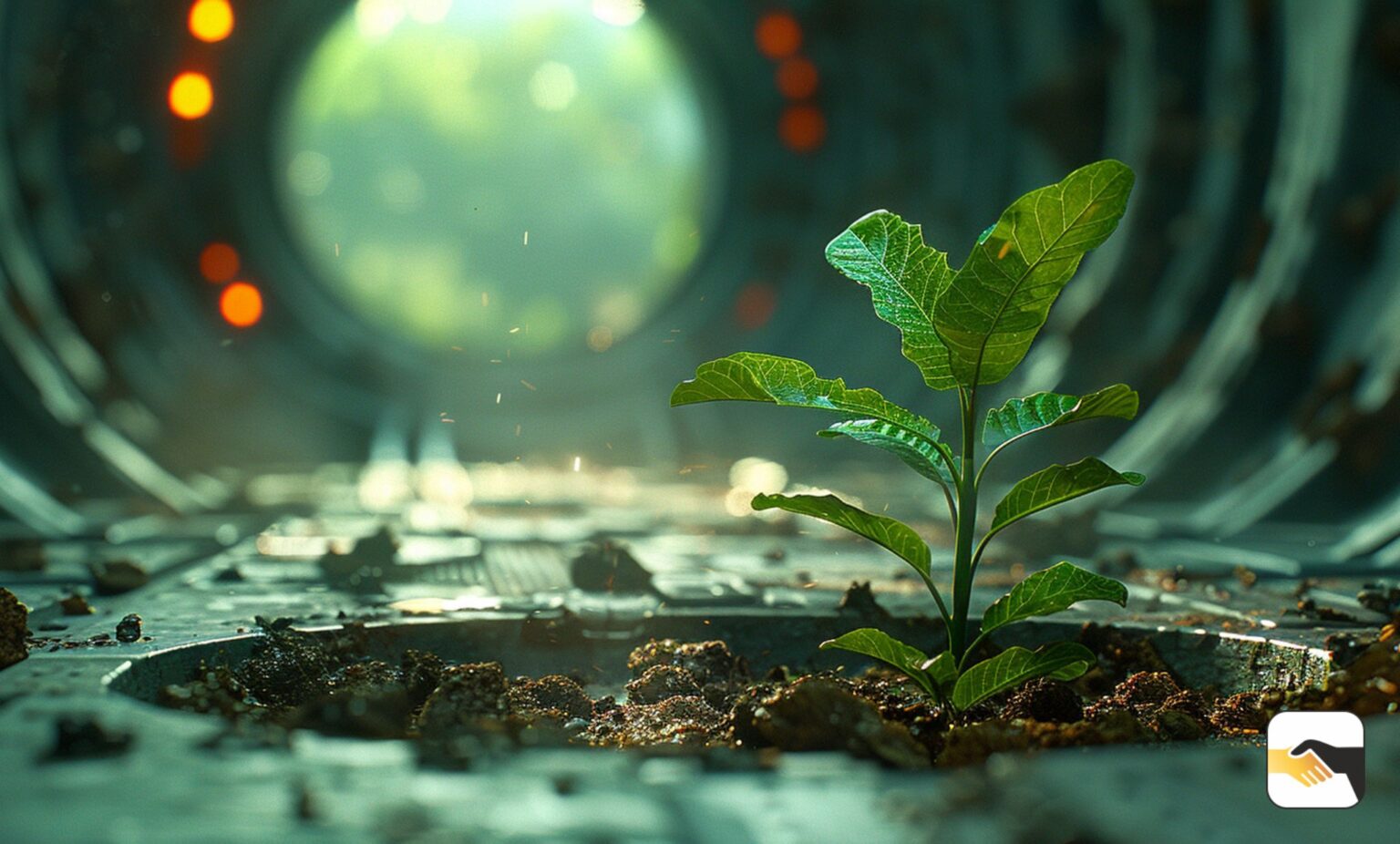
From the right angle, it does look like something out of a sci‑fi storyboard—a strange, bulbous growth tucked inside the International Space Station’s plant hardware, glowing under purple LEDs. But the “alien egg” that set social media off is anything but extraterrestrial. It’s the latest chapter in a story NASA has been telling for years: if we want to live and work far from Earth, we have to learn how to grow our own food out there.
Why NASA Keeps Growing Plants in Orbit
NASA has been testing plant growth in space for decades, long before this purple potato earned a nickname. Today, most of that work on the space station happens inside hardware like Veggie and the Advanced Plant Habitat (APH)—controlled growth chambers designed to mimic a tiny greenhouse in microgravity.
Veggie is intentionally simple. It uses LED lights and a plant “pillow” system to deliver water and nutrients to crops like lettuce and mustard greens. The Advanced Plant Habitat takes things further, with tighter control over temperature, light spectra, and moisture, allowing researchers to run more complex experiments. In both setups, astronauts tend plants, take photos, harvest samples, and send data back to Earth so scientists can see how life behaves when “up” and “down” no longer exist.
The reason NASA keeps investing in this work is straightforward: on missions that stretch months or years, resupplying every tomato, leaf of lettuce, or potato from Earth simply isn’t practical. Plants could become a core part of life support—contributing food, oxygen, and water recycling all at once.
Why Potatoes—and Even Purple Ones—Matter So Much
Potatoes aren’t a stunt crop for NASA; they’re one of the most studied foods in its plant research portfolio. As NASA’s own technical papers point out, potatoes can:
- Produce high yields in relatively compact systems.
- Provide a meaningful portion of calories and protein for astronauts.
- Help scrub carbon dioxide from the cabin air while supplying oxygen.
Experiments going back to the 1980s and 1990s have looked at everything from how potatoes use light and nutrients to how well they can form tubers in spaceflight conditions. One Skylab-era project even measured the oxygen consumption of sprouting potatoes, treating them as a biological machine that might help keep crews alive over the long haul.
In one set of spaceflight tests, NASA scientists documented that potatoes can metabolize and store starch in orbit just as effectively as they do on the ground—a key proof point that tuber crops could actually work as part of a closed life-support system. When you see a bulbous, purple tuber developing inside a growth chamber on the ISS, what you’re looking at is that decades-long line of research continuing in a more visually dramatic form.
The “alien” look comes down to the environment. In microgravity, plants don’t have the same cues to orient their stems and roots. LED lighting tuned to red and blue wavelengths makes leaves and stems glow unfamiliar shades. Growth hardware encloses everything in reflective materials. To an astronaut’s camera—and then to the internet—that all reads as something not quite of this world.
From Viral Photo to Serious Science
It’s easy to see why a single snapshot can explode online: a NASA astronaut shares a close-up of a purple, egg‑like structure slowly expanding inside the ISS, and the “alien egg” jokes write themselves. But NASA’s own framing, across its plant research pages, is consistently grounded.
The agency talks about:
- Understanding how microgravity affects plant structure, chemistry, and genetics.
- Using that knowledge to design future crops and systems for deep-space missions.
- Treating each experiment—whether it’s lettuce, chile peppers, or potatoes—as one more data point toward sustainable exploration.
In fact, work on the ISS is already feeding directly into missions that go beyond low Earth orbit. NASA’s Artemis III mission, planned to return astronauts to the Moon, will carry plant experiments designed to observe growth, photosynthesis, and stress responses in lunar conditions. Data from space station tests helps shape those designs before anything ever leaves for the lunar surface.
Seen through that lens, the “alien egg” is less a mystery object and more a marker: proof that we’re getting better at coaxing familiar life to thrive in unfamiliar places.
What This Means for Life Beyond Earth
NASA’s own language about plant research is careful but quietly optimistic. Potatoes and other crops, the agency notes, could play a “significant” role in future life support systems—providing food, contributing to air and water management, and closing loops that today depend on constant supply runs from Earth.
As plant experiments grow more ambitious—from red lettuce and peppers in Veggie to tuber crops and eventually lunar-grown plants—they’re doing more than generating quirky photos for social feeds. They’re answering practical questions:
- Which crops give the most nutrition per watt, per liter, per square centimeter?
- How do radiation, altered gravity, and closed habitats change plant behavior?
- What mix of technology and biology will keep astronauts healthy on missions measured in years?
The odd, purple potato on the ISS just happens to be a particularly photogenic step along that path.