
Beyond Communication: Why Kanika Believes Business Narrative Is the Leadership Skill of the Future
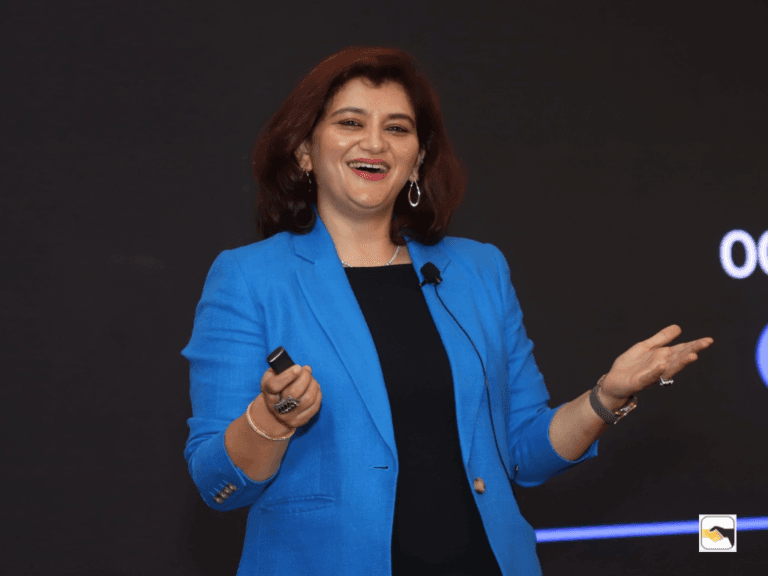
In boardrooms around the world, leaders are investing more time than ever in communication. They host town halls, share strategy decks, publish updates, and cascade messages through multiple levels of management. Yet despite these efforts, many organizations continue to struggle with alignment, engagement, and execution.
For leadership coach, consultant, researcher, and business narrative specialist Kanika Pandey, the challenge is not a lack of communication. It is a lack of narrative.
Over the course of a career spanning more than two decades, Kanika has worked with organizations across sectors, geographies, and cultures. Having led initiatives in sales, talent management, leadership development, and organizational transformation, she has observed that even the most carefully crafted strategies can fail to gain traction when people do not understand the story behind them.
“Organizations often assume that if people have enough information, they will automatically align with a decision or support a change. But human beings do not operate on information alone. They operate on meaning. If people cannot see how they fit into a future being described, even the best strategy can struggle.”
This belief has become the foundation of her work in Business Narrative and Storytelling—a discipline that is rapidly gaining importance as organizations navigate change, complexity, and increasingly diverse workforces.
Why Business Narrative Is More Than Storytelling
The term storytelling has become increasingly popular in leadership circles, but Kanika believes it is often misunderstood.
Storytelling is frequently associated with presentations, keynote speeches, or the ability to engage an audience. While those skills are important, they represent only a small part of what she calls Business Narrative.
Business Narrative is not about telling better stories. It is about helping people make sense of complexity.
It is the bridge between strategy and execution.
It helps employees understand why a change is happening, how it connects to a larger purpose, and what role they play within that future.
This distinction has become especially important as organizations navigate disruption, technological transformation, and shifting workforce expectations.
Leaders today are expected to guide teams through uncertainty while maintaining trust and momentum. In such an environment, technical expertise alone is not enough.
People need context.
They need clarity.
Most importantly, they need meaning.
“Leadership is increasingly becoming an act of sense-making. The leaders who create the greatest impact are often the ones who help people understand not just what is happening, but why it matters.”
When Strategy Meets Human Behaviour
Kanika’s perspective on narrative was shaped long before it became a formal area of expertise.
Her early years in business were spent in sales, where she travelled extensively, worked closely with customers, and learned how decisions are really made. While products, features, and pricing mattered, she noticed that trust often played a far greater role than facts alone.
The experience taught her that people rarely respond to information in a purely rational way. Their decisions are influenced by beliefs, perceptions, past experiences, and the stories they tell themselves about risk, opportunity, and success.
As her career evolved into talent management and leadership roles, the same pattern appeared within organizations.
Whether she was supporting succession planning, leadership development, culture transformation, or organizational change, she found that the greatest challenges rarely stemmed from a lack of capability. More often, they emerged from a gap between what leaders intended to communicate and what employees actually understood.
“Two people can attend the same town hall, hear the same message, and walk away with completely different interpretations. That’s because they are not only listening to the leader. They are also listening to their own experiences, assumptions, and concerns.”
Over time, this observation led Kanika to a simple but powerful conclusion: organizational change succeeds when leaders learn to shape narratives, not just messages.
The Stories That Shape Organizations
Every organization has stories.
Some are visible and intentional. They appear in vision statements, strategy documents, leadership speeches, and company values.
Others operate beneath the surface.
These are the stories employees tell one another in meeting rooms, on video calls, and in informal conversations. They influence how people interpret decisions, respond to change, and understand their place within the organization.
Kanika believes these hidden narratives often have a greater impact on culture than any formal communication effort.
When employees begin to believe that leadership is disconnected, innovation is not rewarded, or certain voices matter more than others, those narratives gradually shape behaviour. Over time, they become part of the culture itself.
This is why she encourages leaders to pay attention not only to what they are saying, but also to the stories that are already circulating within their organizations.
“Most leaders focus on the official narrative. The challenge is that people spend far more time interacting with the unofficial one. If leaders are not actively shaping the story, someone else will.”
Her work with senior leaders often begins with understanding these underlying narratives and helping organizations create greater clarity, trust, and alignment.
Reinvention, Research, and the Long Game
Kanika’s entrepreneurial journey has also influenced her thinking about leadership.
Building a consulting business required her to step beyond established structures and create something of her own. Like many entrepreneurs, she experienced periods of uncertainty, difficult decisions, setbacks, and reinvention.
The years following the pandemic were particularly significant. Markets shifted, client expectations evolved, and businesses everywhere were forced to rethink familiar ways of operating.
Rather than viewing these experiences as interruptions, Kanika came to see them as reminders of an enduring principle: meaningful growth rarely happens overnight.
It requires patience, experimentation, and sustained effort.
A university rank holder, researcher, coach, and lifelong learner, she often speaks about the importance of deep work—the commitment to continuous learning, reflection, and improvement over time.
Whether she is conducting research, facilitating leadership programs, coaching executives, or creating content for her growing LinkedIn community, that philosophy remains consistent.
Success, in her view, is rarely the result of a single breakthrough moment. It is usually the outcome of years spent building capability, perspective, and resilience.
The Future Belongs to Meaning Makers
As artificial intelligence, automation, and digital transformation continue to reshape the workplace, Kanika believes the most valuable leadership capability may be one that is fundamentally human.
The ability to create meaning.
Information is abundant. Data is everywhere. Insights can be generated within seconds.
Yet people continue to seek clarity, connection, and purpose.
In the years ahead, leaders will be expected not only to make decisions but also to help others understand those decisions. They will need to build trust in times of uncertainty, align diverse groups around shared goals, and create environments where people feel they belong.
Business Narrative, according to Kanika, sits at the centre of that challenge.
Through her consulting work, executive coaching, research, podcast What’s Your Story?, and thought leadership on LinkedIn, she continues to explore how narratives influence organizations, cultures, and leadership itself.
Because beneath every strategy, every transformation, and every business challenge lies a simple question:
What story are people choosing to believe?
For Kanika Pandey, the answer to that question may well determine the future of leadership.