
Joshua Byrd: Built on the Work of Generations
Joshua Byrd: Built on the Work of Generations
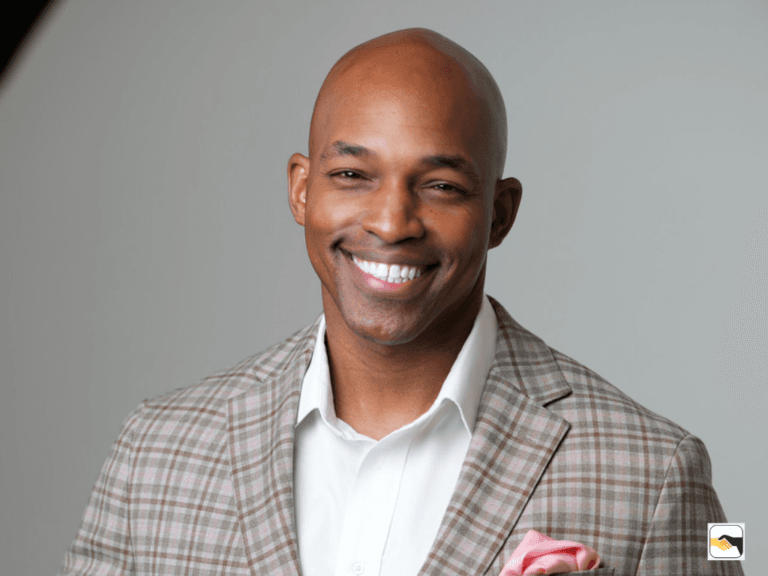
From Atlanta’s railroad yards to executive leadership, Joshua Byrd’s career reflects a conviction shaped by family, military service and business: lasting progress requires doing the work others would rather avoid.
Atlanta’s rise from a railroad town to an international business center is often told through its entrepreneurs, political leaders and major corporations. Less visible are the generations of workers whose labor helped make that transformation possible.
Joshua Byrd’s family was among them.
His grandfather and great-grandfather worked at the Southern Railway shops near Pittsburgh, one of Atlanta’s historically Black neighborhoods, where the family’s roots extend into the nineteenth century. An April 1936 notice in the Atlanta Daily World records a meeting of the Association of Colored Railroad Employees at the family’s home on Rockwell Street, a glimpse into a history of labor and community involvement.
Today, Byrd works across business, higher education and public safety, helping lead organizations and partnerships that shape Atlanta’s workforce and civic life. His approach to leadership, however, was formed long before he entered an executive office.
As a boy, he accompanied his grandfather collecting discarded aluminum cans and cardboard, learning to recognize value in what others overlooked. His stepfather worked in sanitation for nearly two decades, often leaving home around 3 a.m. for physically demanding work that received little recognition.
Those experiences taught Byrd that responsibility was not measured by prestige, but by the willingness to complete necessary work.
After high school, he became a ramp agent for Airport Group International at Atlanta’s airport. His ancestors had helped maintain the railroads connecting the city to the country; he was now supporting the aviation industry connecting Atlanta to the world. In 2001, Byrd enlisted in the United States Marine Corps, serving in aviation logistics supporting helicopters, jets and other military aircraft. He attained the rank of sergeant during eight years of service.
His subsequent career broadened that operational perspective. After earning degrees from Georgia State University and the University of Cincinnati, Byrd served as a DeKalb County deputy sheriff and an Environmental Protection Specialist with the Department of Defense. He later earned his law degree from North Carolina Central University, where he served as president of the Student Bar Association. His legal experience included work with the U.S. Environmental Protection Agency in Washington, D.C., Boston and across New England, followed by service as a staff attorney.
The combination of military, legal and public-sector experience prepared him for leadership roles in which sound judgment depends on understanding both organizational systems and the people they serve.
At Hawque Protection Group, an Atlanta-based private security company founded in 2020, Byrd serves as vice president and equity partner. The company has grown to approximately 200 employees and earned four consecutive Atlanta Business Chronicle Pacesetter Awards, recognizing it among the region’s fastest-growing privately held businesses.
Byrd’s responsibilities include training employees and clients, with an emphasis on professionalism, preparation and the consistent execution of essential tasks. In an industry built on trust, organizational standards must extend beyond written policies to the everyday conduct of the people representing the company.
That work helped inspire his book, Take Out the Trash: How Doing What Others Avoid Builds Discipline, Trust, and Opportunity.
The title reflects an ordinary responsibility with broader implications. Few people enjoy taking out the trash, but neglecting it creates problems that eventually become impossible to ignore. A clean, orderly environment requires someone to perform the unpleasant work, address what remains and maintain the conditions that allow others to function effectively.
Byrd sees a parallel in business. Difficult conversations, overlooked responsibilities and unresolved problems can accumulate until they undermine performance. Organizations that confront those issues early, establish clear expectations and maintain consistent standards are better positioned to earn trust and sustain growth.
The philosophy is not about doing unpleasant work for its own sake. It is about recognizing that meaningful results often depend on responsibilities people are tempted to postpone. Hawque’s success reflects the collective efforts of its leadership and employees, while Byrd’s emphasis on training reinforces the habits that help organizations deliver on their commitments.
The same concern for developing people extends to his work in higher education. As Director of Career Services for American InterContinental University’s Atlanta, Houston and Online campuses, Byrd leads efforts connecting students and graduates with employers and professional opportunities. He also serves as Program Chair and Professor of Criminal Justice at AIU Atlanta, strengthening relationships between education, industry and public agencies.
Among those relationships is a partnership with the Georgia Bureau of Investigation. Byrd suggested establishing a memorial observance dedicated specifically to GBI agents who died in the line of duty. Developed collaboratively with agency leadership and staff, the idea became the annual Fallen GBI Agent Memorial Service and Wreath Laying Ceremony. Held in conjunction with National Police Week and National Peace Officers Memorial Day, the observance is approaching its sixth year.
His understanding of responsibility also informs his work with young people confronting challenges far removed from corporate offices.
At seven, Byrd witnessed a fatal shooting. As a teenager, he was held at gunpoint, and over the years he lost friends to gun violence. Those experiences shaped his belief that preventing violence requires addressing the circumstances and emotions that can lead to it, rather than responding only after harm occurs.
As a board member of the 100 Black Men of Atlanta and chair of its Violence Prevention Committee, Byrd has spent several years helping organize conflict-resolution and de-escalation workshops involving Atlanta Public Schools students. The programs encourage young people to manage disagreements, recognize the consequences of their decisions and respond to conflict without violence.
Poetry, essay and arts competitions have provided another outlet, allowing students to express grief, frustration and personal experiences through creative work. The objective is not simply to discourage destructive behavior, but to give young people constructive ways to be heard and to transform difficult experiences into purpose.
The initiatives have involved partnerships with the Satcher Health Leadership Institute at Morehouse School of Medicine, The King Center and other organizations. They reflect the same principle Byrd emphasizes in business: problems left unattended rarely improve on their own, and lasting solutions require sustained effort.
His leadership has also extended into institutional governance. Byrd previously chaired the Clayton County Board of Ethics, served on the Southern Regional Hospital Authority board and was president of the Whitewater Creek Board of Directors. In 2025, he participated in the Atlanta Regional Commission’s Regional Leadership Institute.
His expertise in public safety and security has drawn attention from national and regional media, including CBS, FOX 5 Atlanta, 11Alive, The Portia Show, The Atlanta Journal-Constitution and HowStuffWorks. His contributions have also earned recognition through Georgia State University’s 40 Under 40, Leadership Clayton’s Top Leader distinction and the Thomas W. Dortch Jr. Civic Leadership Award.
Across these responsibilities, Byrd’s career reflects an understanding that leadership involves more than setting direction. It requires developing people, addressing difficult problems and building institutions capable of sustaining progress beyond any one individual’s involvement.
Atlanta has changed considerably since his ancestors worked in its railroad shops. Its industries have expanded, its institutions have evolved and its challenges have grown more complex. Yet the values Byrd inherited remain relevant to the organizations and communities he serves.
The work may be less visible than the results it produces, but it remains essential to what comes next.
The tools have changed. The responsibility has not.