
Jay Lyonett: Building Growth, Building People, Building What Lasts
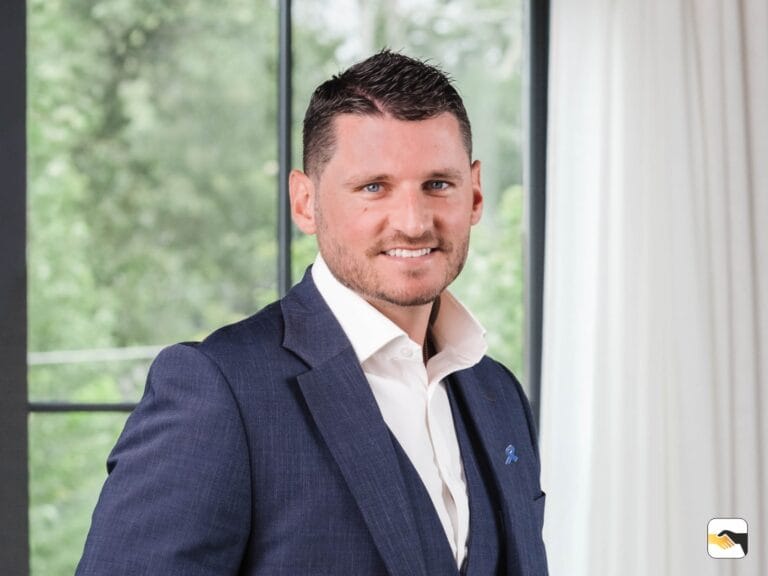
Jay Lyonett has spent his career learning how to turn potential into momentum.
Across MIC, Concert, and now Artisight, he has worked in environments where growth could not depend on one talented salesperson, one big relationship, or one good year. The challenge was harder: build a commercial organization that could repeat what worked, adapt when the market changed, and become stronger as it grew.
That distinction has come to define how Jay thinks about leadership.
His value, he says, is no longer simply in knowing how to sell. It is in building the systems, teams, and people that make great performance repeatable—and eventually make his own involvement less necessary.
“A great salesperson can have a great year. A great growth leader builds an approach that allows a team and a company to have great years repeatedly.”
Today, Jay serves as Senior Vice President of Growth at Artisight, helping the company bring its Smart Hospital Platform to health systems looking for better ways to improve workflow, efficiency, communication, and measurable ROI.
The technology is sophisticated: AI-powered ambient intelligence, connected sensors, real-time communication, and clinical integrations.
But Jay sees the opportunity in simpler terms.
Hospitals are being asked to do more with less. Nurses and clinicians are stretched. Patients want care to feel more connected, not more complicated. If technology can remove friction from the work of caring for people, then growth is about more than selling software. It is about helping health systems create room for people to do the work only people can do.
That is the kind of growth Jay wants to build.
The Work Behind the Growth
Jay learned early that sustainable growth is rarely glamorous.
At MIC, he began to understand how much stronger an organization becomes when discovery, messaging, executive alignment, follow-up, and closing are deliberate rather than dependent on individual heroics. At Concert, and later at Artisight, that lesson became a larger operating philosophy.
The goal is not to eliminate judgment or instinct. It is to make sure the organization does not have to rediscover the same lessons every time someone new walks through the door.
That requires discipline. It also requires the willingness to change.
Jay stays close to nurses, CNIOs, CIOs, physicians, operators, partners, and internal teams because the market rarely announces its next change in advance. The friction shows up first in conversations. So does the opportunity.
At Artisight, that has meant moving from conversations around individual virtual-care use cases toward broader enterprise discussions about smart hospitals, AI, workflow integration, and measurable ROI.
“The process should be disciplined, but never rigid.”
That balance is central to how Jay operates. He wants teams to know what good looks like without creating a process so rigid that people stop thinking.
And as his role has grown, more of his work has become about connecting people who do not always see the same problem from the same angle.
Sales, clinical, product, engineering, delivery, finance, partners, and health-system leaders all have a stake in the outcome. Jay sees himself less as the person who needs to have every answer and more as the person responsible for getting the right people into the conversation, creating clarity, and keeping everyone moving in the same direction.
He calls it being the quarterback—not the hero.
That distinction matters.
Making Complexity Make Sense
Jay’s background in public relations and communications has shaped how he approaches that work.
He learned that communication is not simply about having a strong message. It is about understanding the person receiving it.
That is especially important in healthcare. A nurse, CIO, CFO, physician executive, and board member may all care about the same transformation while seeing completely different reasons to pursue it.
“Strong communication is not about talking more; it is about understanding what matters to the person across from you and making complexity feel clear.”
At Artisight, that means translating technology into consequences people can understand.
The platform may involve AI, sensors, communications infrastructure, and clinical integrations. But the decision ultimately comes down to questions that are much more human: Will this make the work easier? Will it help clinicians spend more time where they are needed? Can the organization measure the value? Will patients experience better care?
Jay’s job is to connect those questions.
That ability—to move between technical complexity, business priorities, and human outcomes—is increasingly central to how he creates alignment.
When Revenue Meets Trust
For Jay, business development has never been only about getting to the contract.
He wants people to know that he will tell them the truth, do what he says he will do, and stay engaged when a conversation becomes difficult.
“Revenue matters, but trust compounds.”
The phrase captures a philosophy that has shaped his career.
Some of the most meaningful opportunities Jay has seen have come years after the first conversation, because the relationship was established before there was anything to buy. Some professional relationships have become close friendships. In both cases, the original transaction became less important than the relationship that survived it.
That is the difference between a network and a reputation.
A network can produce an introduction. A reputation determines what happens after the introduction.
Jay wants people to know that when he sits across the table from them, he is trying to solve the problem with them—not simply sell to them.
In an industry where enterprise decisions can take years and trust can determine whether a conversation ever gets serious, that compounds.
The Real Measure of Leadership
Jay’s leadership has also changed as he has become more experienced.
Earlier in his career, leadership could mean having the strongest answer in the room. Now, he is more interested in asking the right question, listening carefully, and creating enough room for someone else to find the answer.
He does not want a team that needs him in every deal or decision.
He wants people who can challenge him.
He wants people who can make decisions without waiting for permission.
And ultimately, he wants people who can become more successful than he is.
“I will forever pride myself on being a leader who wants every member of my team to truly end up better, more successful than me.”
That philosophy was shaped by mentors including Kevin Elson, Kurt Essenmacher, and Dr. Andrew Gostine. They gave Jay something he now tries to give others: responsibility, trust, honest feedback, and enough room to make mistakes and learn from them.
“Because of them, I am a better man…”
The lesson stayed with him.
Developing people is not a side effect of building a successful organization. It is one of the clearest measures of whether the organization was built well in the first place.
The Scoreboard Isn’t Everything
Jay is fiercely competitive. He likes winning, and he has built much of his professional life around the preparation and discipline required to do it.
Sports taught him that.
But coaching kids has taught him something competition alone could not.
“At seven years old, you quickly realize that every kid develops differently. One player may need to be pushed, another needs confidence, another needs patience, and another just needs someone to believe in him. You can’t coach every child the same way and expect the same result.”
That realization has become a leadership lesson of its own.
People do not develop on the same timetable. They do not respond to the same motivation. And sometimes the most important thing a leader can provide is not another instruction, but belief.
“Your job isn’t to prove how good you are—it’s to figure out how to help someone else become better.”
That is a harder measure of leadership because it is not always visible on a scoreboard.
Jay has seen the same thing in coaching that he has seen in business: sometimes the breakthrough comes after a long stretch when nothing appears to be happening.
A child who finally makes the play they were afraid they could not make does not just experience a successful moment. They leave with a different belief about what they are capable of.
For Jay, those moments matter.
They are also part of a broader belief that success creates an obligation to create opportunity for someone else.
His support of Alex’s Lemonade Stand Foundation, investment in students who may not have the same opportunities as others, and commitment to youth sports all reflect that instinct.
The investment does not always have to be large.
Sometimes it is time. Sometimes it is attention. Sometimes it is encouragement.
Sometimes it is simply being the person who believes in someone a little longer than they believe in themselves.
The Part of Success That Changed
If competition taught Jay how to pursue success, fatherhood changed what success means.
Earlier in his life, achievement was easier to measure: winning, advancing, building something bigger, reaching the next goal.
Those things still matter to him.
But children have made the cost of absence impossible to ignore.
Jay wants his children to see a father who is ambitious, works hard, and is willing to chase difficult goals. But he also wants them to remember the ordinary things—the games, the conversations, the moments when they needed advice, and the times when they simply needed their dad.
For him, being present is not just about showing up physically.
It is about making another person feel that they matter.
“I want them to believe you don’t have to choose between building something meaningful and being deeply present for the people you love.”
That may be one of the biggest changes in Jay’s definition of ambition.
He no longer sees professional achievement and personal presence as competing goals.
He sees them as responsibilities that have to coexist.
What Comes Next
Professionally, Jay wants to help build Artisight into the defining smart-hospital platform of its era. He wants to build a growth organization known not just for the results it produces, but for the way it produces them.
And he wants to help develop the next generation of sales and growth leaders who can take what has been built and make it better.
Personally, the ambition is more intimate.
He wants his children to see that meaningful work does not have to come at the expense of meaningful relationships.
“I want them to be proud of what I built, but even more proud of how I showed up for them and for others.”
That is a different kind of ambition.
It is measured not only by what sits on a résumé, but by who is stronger because you were there.
Become a Builder
That is also what Jay tells people earlier in their careers.
Do not settle for being a performer, he believes. Become a builder.
Learn to sell, but understand why the sale happened. Build a repeatable discovery process. Map stakeholders. Develop the business case. Learn to communicate with executives. Then take what worked once and figure out how to make it work again.
He also encourages people to run toward ambiguity. The situations without an obvious playbook are often where the greatest growth happens.
Be relentlessly coachable, he says, but do not become dependent on someone else for confidence.
And keep following up.
“Follow up when others stop.”
The advice sounds simple. Living it is not.
It requires doing uncomfortable work, protecting a reputation, staying resilient when the answer is no, and understanding that every interaction contributes to how people experience you.
Over time, those things become a career.
What Lasts
Jay does not want to be remembered simply for revenue numbers, titles, or the organizations he helped grow.
He wants his children to remember an ambitious, competitive father who worked hard but never made them question whether they mattered.
He wants the people he led to remember someone who challenged them, believed in them, told them the truth, and wanted them to succeed—even if that success eventually took them somewhere beyond him.
And he wants the children he coaches to remember that baseball was fun, that someone believed in them, and that being a great teammate mattered as much as being a great player.
“I hope it is that I helped build things that lasted and people who became stronger.”
That may be the clearest measure of the life Jay is trying to build.
Titles change. Jobs end. Revenue numbers eventually become history.
People remember something else.
They remember whether you believed in them. Whether you showed up. Whether they became better because you were there.
For Jay, that is the kind of growth that lasts.