
Reimagine Wellbeing. Change the Narrative. Lead with Mental Wealth.
Why Mental Wealth is the foundation organisations are missing – and what it takes to build it.
Burnout has a branding problem. It gets filed under individual failures, poor boundaries, weak resilience, not managing stress well enough. Organisations respond with yoga sessions and free lunches, tick a compliance box, and move on. Meanwhile, the World Health Organization has classified burnout as an occupational phenomenon, Gallup reports that nearly 60% of the global workforce is disengaged, and the economic cost of work-related stress runs into hundreds of billions of dollars annually. This is not a personal crisis wearing a collective mask. It is a systemic failure, and leadership is where it starts – and where it has to stop.
For two to three years, I was living proof of that gap. I facilitated leadership roundtables and workshops on workplace wellbeing while burned out myself, not just then, but for a long time before. My sympathetic nervous system was in chronic overdrive. My doctor couldn’t believe I was still functioning, let alone running sessions. And every conversation I sat in, I heard the same responses: we do Friday fun days, Wednesday free lunches, an annual wellness day with smoothies and yoga. Tick. Done. All the while struggling to be passionate about what I was presenting because there was no ‘practice what you preach’, it was just sharing general information day-in and day-out. At the same time seeing no actual results.
What unsettled me wasn’t just the inadequacy of the response. It was the disconnect between what leaders believed they were doing for their people and what their people actually experienced. I was presenting theory I could no longer connect to genuinely, because I was one of those people. A high-functioning, visibly capable professional whose internal resources had quietly run out.
That experience changed everything about how I understood the problem, and what solving it would actually require.
The Performance of Wellness
Most corporate wellness programs don’t fail because people don’t care. They fail because they are designed for a one-size-fits-all and visibility, not outcomes. The average retention rate of a corporate wellness program sits between one and eight percent. If any other organisational initiative returned those numbers, it would be scrapped. But wellness programs persist because they signal intent, not because they create sustainable change.
There is a deeper structural problem. The way most programs are designed, they stigmatise the very people they claim to help. Accessing support means accepting a label – a “mental health condition” – which creates exactly the fear of judgment, scrutiny or even possible job loss that keeps people from seeking help in the first place. Generalised webinars, articles written for no one in particular, and motivational talks delivered to rooms full of exhausted people all on their own journey of exhaustion, are not interventions, they are noise.
Scientifically, they also cannot work for the people who need them most. When someone is chronically burned out, the prefrontal cortex; the part of the brain responsible for decision-making, focus, and rational thinking, is effectively offline. New information cannot be absorbed. A burned-out person cannot be motivated by a talk about motivation. The brain is in survival mode, not learning mode. We keep delivering content to people who are not in a state to receive it, and then wonder why nothing changes.
We also keep treating burnout as an individual experience, when it is almost always collective. Every individual and team I have worked with across industries carries some form of depletion, differently, for different reasons, but pervasively. The leader who seems fine is often the one holding the most. The high performer hitting every deadline is often the closest to collapse. Burnout does not announce itself. It accumulates quietly, then breaks loudly.
Asking a Different Question
The question organisations have been asking is: how do we respond when people burn out? It is the wrong question.
The right question is this: what internal resources or proactive therapies does a person need to prevent burnout, recover from it, and actually thrive? What buildable capacities determine whether someone breaks under pressure – or doesn’t?
This reframe changes the intervention. It moves from crisis management to capacity building. From a once-a-year event to a daily practice. From one-size-fits-all to genuinely individual with full autonomy to the user. And it places appropriate responsibility not on the person struggling, but on the system they are operating within.
After my own experience, and after extensive research into neuroscience, coaching methodologies, and human behaviour, I identified five specific capacities that determine whether a person can sustain themselves under pressure. I call these the 5 Capitals of Mental Wealth. They are not personality traits. They are trainable.
Cognitive Capital is the ability to think clearly, hold focus, and make confident decisions. It is the foundation of execution at every level – not just for those with leadership titles. When Cognitive Capital runs low, decision fatigue, avoidance, and mental fog fill the space.
Emotional Capital is self-awareness and the capacity to regulate your internal states under pressure. It determines whether a person reacts or responds, whether they can manage themselves before managing others. Most team culture breakdowns trace back, in part, to a collective depletion of this capital. It is not about emotional expression. It is about emotional agility.
Resilience Capital is the internal architecture that allows a person to absorb pressure and recover, rather than accumulate it until something breaks. This is not toughness or endurance. It is the capacity to regulate, process, and return – and it depends on the other capitals being intact.
Purpose Capital is clarity of direction and values. When people understand why they do what they do, they show up differently. When that clarity disappears, they drift into groundhog days, going through the motions without knowing what they are working toward. This is why so many people in burnout struggle to identify what they actually want. Purpose Capital is not motivation. It is orientation.
Growth Capital is the capacity to adapt, absorb change, and find possibility in disruption. It is the last to come online when the others are depleted, and the clearest signal that someone is genuinely recovering. When all five capitals are being actively built, people do not just survive change, they move through it and they thrive.
These five capacities are interdependent and, critically, they are responsive to the right conditions. Given the right tools, autonomy, privacy, permission, trust, and sustained support, people can build them. That is the shift organisations need to make; from providing responses to creating conditions.
What Leadership Actually Requires
We live in a time of information overload. The personal development industry is enormous, AI is reshaping every industry, and people are more exposed to more advice than any previous generation. What people do not need is more information. They need tools; private, personalised, practical tools that build something over time rather than overwhelm them further. People need proactive therapies, coaching, advice and programs tailored to their individual needs.
Organisations that will lead the next decade are not those that respond best to burnout crises. They are the ones that make those crises less likely – by investing in the internal resources of their people as infrastructure, not afterthought. That means moving from stand-alone events to sustained support. From group programs that assume everyone is the same, to approaches that meet people at their actual point of need. From stigmatised access to clinical help, to autonomous, private tools that build capability over time.
Organisations need a system that can show them aggregate results and reporting without making it personal to an individual who is struggling, but provides them with enough to react with purpose, and then implement a workshop or wellness day targeted at the needs of the people, the teams and the organisation and their unique culture.
The ecosystem I built – including the Lumora wellness platform, the 5 Capitals workshops, and the Mental Wealth framework, was designed around exactly this: daily practice over one-off events, individual autonomy over generalised content, prevention over crisis response. It is what I wish had existed when I was running on empty in a room full of people pretending they weren’t.
But the platform is secondary. The shift is primary.
The five things your people are running out of are not energy, engagement, resilience, focus, or motivation. Those are symptoms. What they are running out of is the internal capital to rebuild all of those things – and they need organisations that understand the difference well enough to help.
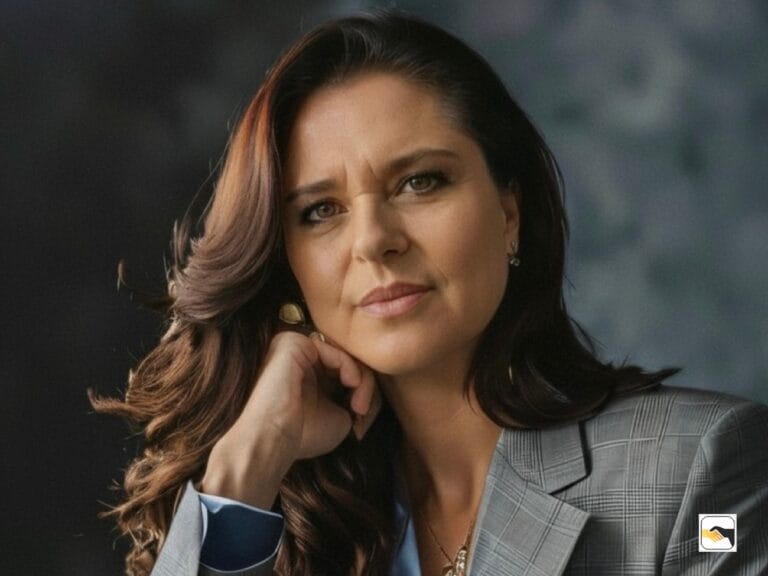
Lauren Thompson is the Founder of Capital 5 Consulting and creator of the Mental Wealth framework. Her vision is to shift workplace wellbeing from crisis response to human-centred capacity building, through the Lumora wellness ecosystem, the 5 Capitals methodology, and gamified interactive workshops.