
Seema Ahluwalia: Driving Operational Excellence in Renewable Energy Projects
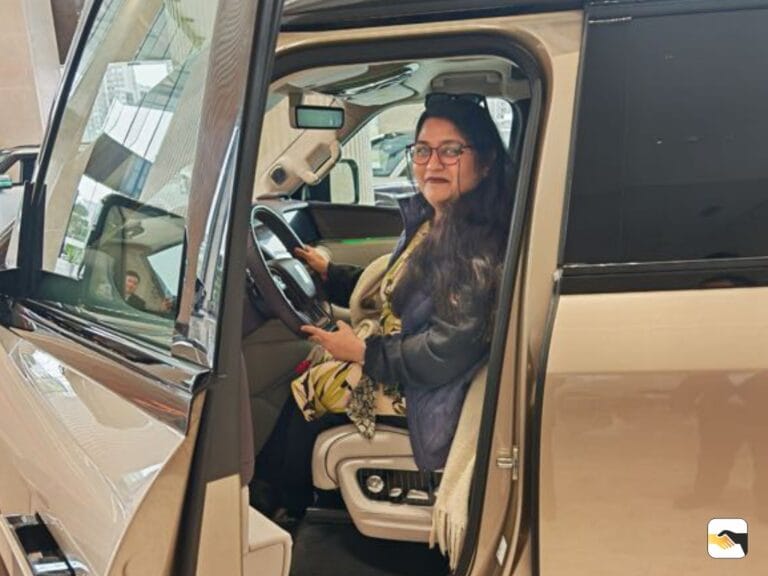
As the energy transition accelerates, the challenge is no longer innovation—it is integration: aligning technology, capital, and global manufacturing at speed. Battery storage and electric mobility sit at the centre of this shift, demanding partnerships that operate seamlessly across geographies. Within this complexity, Seema Ahluwalia focuses on what most strategies overlook—execution at scale.
As Vice President of Business Development at JSW Energy, she works across a critical corridor in the sector, linking India’s clean energy ambitions with China’s manufacturing ecosystem. Her role centres on building partnerships with leading battery cell manufacturers to scale Battery Energy Storage Systems (BESS) and EV pack production.
With a background in automotive engineering, she brings a production-led lens to the energy business—prioritising how systems translate into output. She leads sourcing, capital decisions, and supplier integration across renewable projects, ensuring growth is matched by operational readiness. Her approach is anchored in discipline: quality, cost, and delivery as the core drivers of scalable energy systems.
Choice, Courage, and a Barrier-Free Mindset
Seema’s decision to pursue mechanical engineering was shaped early by a deep curiosity for how systems work. As a child, she was drawn to machinery, surgical systems, and aerospace—driven by how complex systems work.
That instinct, however, did not always align with what was expected of her. She recalls that many people encouraged her to choose a more conventional path, away from the shop floor—an idea she resisted instinctively. She knew early on that she wanted to build and work where things were made.
Looking back, she sees that clarity as a result of something more foundational: the freedom to make choices without internalising gender bias—something her parents actively encouraged. “Accepting your own choices freely, without bias, is the only way to reach your full potential,” she says. That belief continues to guide her—quietly but consistently—through the decisions that shape her career.
Earning Respect Through Competence
Seema’s early years in the automotive sector proved formative. As a graduate engineer trainee in the 1993 batch at Eicher Good Earth (now Volvo Eicher), she entered a shop-floor environment where acceptance was uneven. While peers and senior leaders were largely supportive, some workers were still adjusting to taking direction from a young woman engineer in a traditionally male-dominated environment.
The experience became a defining lesson. “That friction didn’t break me; it taught me to earn authority quietly, through competence rather than confrontation,” she says. Over time, consistent performance—not assertion—became her way of building credibility.
Two Cultures, One Leader
Seema has worked across India and China for over two decades, shaping a nuanced leadership style through cross-cultural exposure. In India, she experienced a more execution-driven work culture.
As a foreigner in China, she encountered a more structured, collective approach. She also observed that Indian subordinates interpret commands in diverse ways, while Chinese subordinates expect clear, concise, and accurate directions. “As a bridge builder between these two worlds, I’ve learned to use both styles deliberately—adapting my approach to optimise leadership on both sides.” She leads with adaptability across cultures.
Purpose-Driven Leadership
Seema remains committed to working towards a larger purpose beyond personal goals. She believes in honesty and righteousness and prefers to speak frankly without fear, even when it feels uncomfortable. She shares, “Those two values—service to a larger purpose and unafraid truthfulness—have been my anchors.” She applies these principles across her work.
Strategy Under Pressure
Seema navigates pressure by thinking in horizons of 4–5 years in most situations, while recognising that COVID shows how short-term disruptions override even the best long-term plans. Her natural mechanism responds to the long-term, yet near-term realities demand attentive, almost tactical focus.
She sees near-term crises as firefighting and long-term strategy as prevention. Aging shapes her calmness, though it remains a double-edged sword between confidence and worry. “I’ve learned to lean into the confidence.” She balances perspective with action.
Trust, Disruption, and Growth
Seema sees a clear sequence in global work environments: familiarity builds trust, which enables collaboration. Yet her global journey presents a complex mix. She notes that deep trust in surroundings can shift suddenly when one incident disrupts everything.
During her 23 years in China, COVID became that defining moment, pushing her to relook at and redefine trust and collaboration. Her Chinese neighbours, once unfamiliar, became her lifeline, especially as a vegetarian, while travel restrictions kept her within the country for three years.
Through these experiences, she grew wiser and more sensible, understanding different nationalities’ mindsets. She approached collaboration with stronger responsibility, alertness, and a balanced sense of trust. In her words, “That understanding makes you trust and collaborate with more responsibility and alertness, not less.”
Prioritising What Matters
Seema acknowledges that balancing professional ambition with commitment to social impact and philanthropy remains a hard balance. She follows a simple technique: prioritise the philanthropic commitment without compromising professional timelines. She believes, “You don’t find time; you make it.” She relies on passion and commitment to carry her through, ensuring both responsibilities move forward with equal intent.
Learning Through Humanitarian Work
Seema views philanthropy as one of the strongest influences on her leadership mindset. Through years of working with blind children, prevention of visual impairment initiatives, and humanitarian organisations across Asia, she developed a highly hands-on approach to problem-solving, adaptability, and execution under constraints.
Unlike corporate structures, philanthropic organisations often function with extremely lean teams, limited resources, and constantly changing volunteers—especially within expatriate communities in Shanghai. In such environments, responsibilities cannot simply be delegated and forgotten. Seema learned to stay involved across every layer of execution, from coordination and administration to fundraising, stakeholder engagement, and project continuity.
She explains, “You cannot simply pass the reins. You have to keep doing everything, from clerical work to chairwoman for raising funds.”
These experiences strengthened her ability to operate calmly in unpredictable situations while building resilience, versatility, and faster decision-making. For Seema, philanthropy is not separate from leadership. She believes humanitarian work builds a deeper sense of responsibility, discipline, and perspective. All of these qualities continue to shape how she leads teams and manages complex business environments today.
Clarity Over Control
Seema defines empowerment as creating clarity so people can act independently. She believes in simplifying her communication so others understand clearly and think in similar ways moving forward. She sees simplicity as the foundation for building a lean mindset that supports growth and clarity.
She states, “Empowerment is not about giving power; it is about removing confusion so people can find their own.” She focuses on building confidence through understanding, not dependency. She also continues to strengthen communities and teams with this clear, structured perspective every day.
Keeping the Knowledge Pot Growing
Seema continues learning and reinventing herself through disciplined reading, strong comprehension, and the ability to connect dots and turn learning into applied use cases. She treats reinvention as a necessity in agile environments. She stays grounded in a simple belief: “knowing that you don’t know is itself a form of knowledge.” That understanding keeps her curious and open, reinforcing that learning is continuous. She strengthens her perspective sthrough continuous learning, reflection, and practical application.
Redefining Strength
Seema believes women leaders in male-dominated industries should not shy away from being emotional, as it strengthens peer trust and builds acceptance as an empathetic leader, while she cautions against becoming overly sensitive. She also encountered situations where women leaders were not always viewed with the same level of acceptance or technical confidence as their male counterparts.
She advises, “Don’t defend yourself. Focus on your work.” She acknowledges that women are sometimes excluded from key discussions early on, yet she views this as part of the journey. She stresses that if one remains essential, entry into those rooms follows. She encourages women to choose their battles wisely, so they can focus on high-impact work.
Building Global Engineers
Seema encourages young women aspiring to build global careers in engineering and strategy to trust their inner calling and pursue it with conviction. She believes that in fields like mechanical and industrial engineering, women begin in tough environments, often carrying the weight of proving themselves, which ultimately makes them stronger engineers.
She advises them to focus on becoming globally fit by understanding culture, noting that women engineers find strong acceptance in countries like Germany and the United States. She views strategy as an inbuilt feature and cautions against artificially overtraining it.
She emphasises observation as a powerful tool, urging women to learn how different individuals perceive the same situation. “That observation can make you wiser than any textbook.” She emphasises that cultural awareness and self-belief shape global careers.
Building a Legacy
Seema looks ahead to 2026 and beyond with a clear vision of a legacy rooted in impact and inclusion. She believes it is important to plant the seed of philanthropy at a very early age, making it a subconscious reaction and an instinct for acts of kindness. She encourages her community of women to lead by example and seed this mindset in their children and those around them.
She views inclusion as a state of mind where consistent work allows gender to recede into the background. She expresses, “That is the legacy I hope to leave: not just what I built, but how easily the next woman after me is accepted.” She aims to make acceptance the norm.