
SpaceX’s Next Chapter: How a Private Rocket Company Became a Space Infrastructure Giant
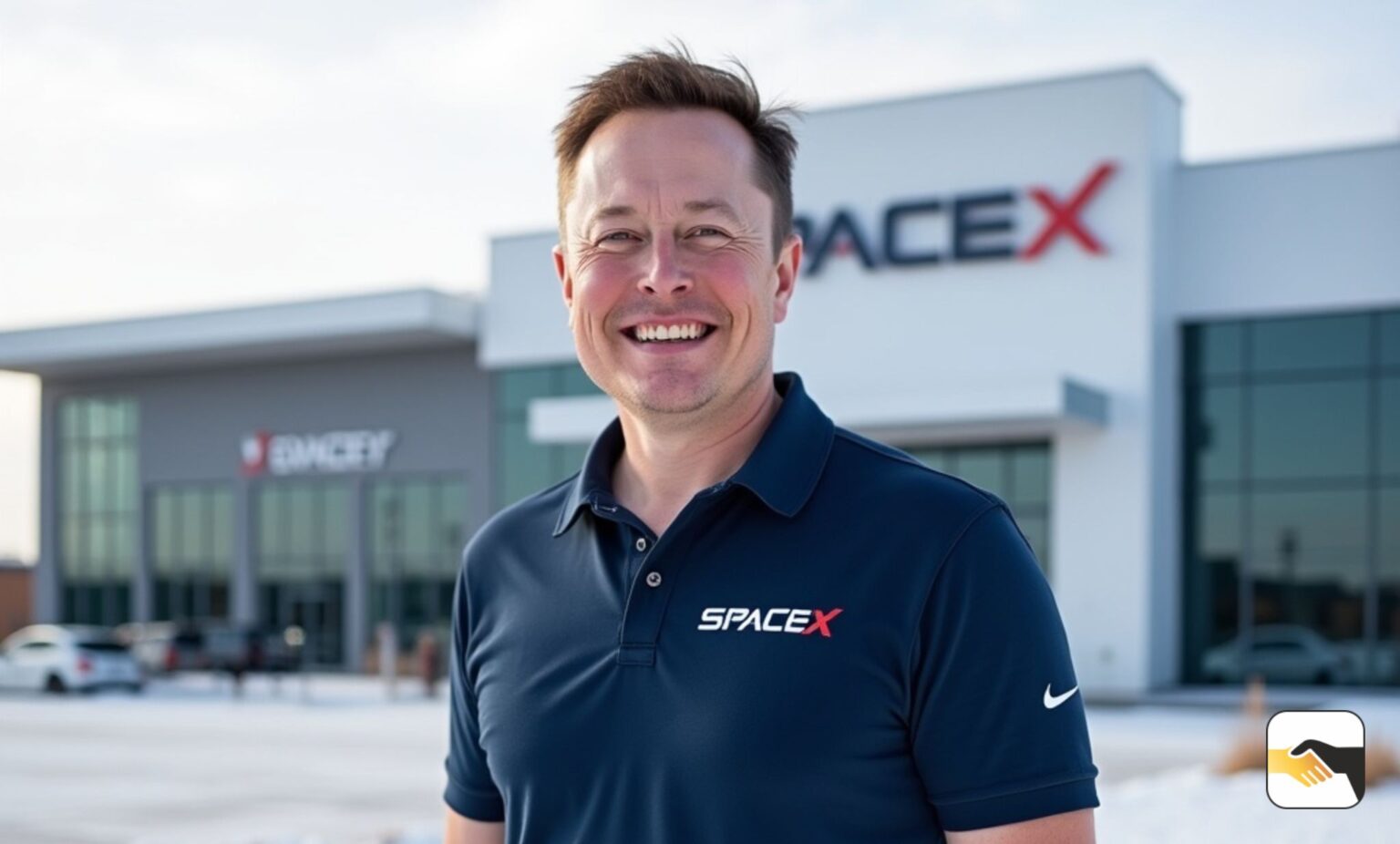
SpaceX has spent the last two decades quietly rewriting the rules of spaceflight. What began with a single Falcon 1 test launch has grown into a full-stack space infrastructure business: reusable rockets, a global satellite network, and a next‑generation vehicle built to carry people and cargo to the Moon, Mars, and beyond. The through-line is simple but bold—make spaceflight so reliable and affordable that it stops being an experiment and starts being an everyday tool.
From Falcon Workhorse to Fully Reusable Systems
Walk through SpaceX’s public updates and you see one theme repeated: reusability is not a side project; it’s the business model. Falcon 9 and Falcon Heavy have racked up more than a hundred successful flights, with first stages landing and relaunching dozens of times, turning what used to be disposable hardware into a recoverable fleet.
That flight heritage isn’t just a bragging point. It feeds directly into Starship, the company’s next‑generation, fully and rapidly reusable transportation system designed to carry both crew and cargo to Earth orbit, the Moon, Mars, and “anywhere else in the solar system.” Where Falcon proved that landing and reusing orbital boosters is possible, Starship is being built to extend that logic to the entire stack—booster and upper stage—at a far larger scale.
On its site, SpaceX describes Starship and its Super Heavy booster as a super heavy‑lift vehicle, engineered for rapid turnaround and high payload capacity. The goal is clear: dramatically lower the cost per kilogram to orbit, and in doing so, open the door to missions and businesses that simply weren’t financially realistic before.
Starship, Starbase, and the Road to Mars
The company’s updates trace an arc from early Starship prototypes at Starbase in Texas to live flight tests and technical briefings led by Chief Engineer Elon Musk. Starship’s mission profile is unapologetically ambitious. SpaceX frames it as the system that will “help humanity return to the Moon, travel to Mars, and ultimately become multi‑planetary.”
That multi‑planetary vision isn’t just marketing language. Starship is being designed to:
- Carry large crews and heavy cargo in a single launch.
- Support refueling in orbit to extend range.
- Enable missions to cislunar space, Mars, and deep‑space destinations.
Every Falcon mission, every recovered booster, is positioned as a stepping stone—feeding data into Starship’s development and validating the idea that rockets can behave more like aircraft, flying repeatedly instead of being scrapped after one use.
National Security, Commercial Launch, and a Maturing Fleet
SpaceX isn’t only chasing Mars. It has become a central launch provider for governments and commercial customers, a shift the company underscores in its public materials. The U.S. Space Force selected SpaceX to carry out critical National Security Space Launch (NSSL) missions, building on long‑running collaboration with the U.S. Air Force and National Reconnaissance Office.
With Falcon 9 and Falcon Heavy, SpaceX notes that it can perform “every type of national security space mission” to all required reference orbits, with performance and schedule margin. That capability didn’t appear overnight. SpaceX invested over a billion dollars of its own capital into the Falcon fleet and related ground infrastructure, integration procedures, and mission assurance processes, explicitly positioning that private spending as proof of its commitment to reliable launch.
The result, as the company points out, is not just more launch options; it’s competition that “saved billions” in taxpayer funds by bringing reusable rockets into a market long dominated by expendable vehicles.
Starlink and the Space Infrastructure Stack
Alongside launch and Starship, SpaceX has been building something quieter but just as transformative: Starlink, its low‑Earth‑orbit satellite constellation designed to deliver high‑speed internet globally. While the investor chatter focuses on valuation, SpaceX’s own messaging frames Starlink as infrastructure—connectivity for remote regions, ships, aircraft, and communities that traditional networks haven’t reliably reached.
Taken together, Falcon, Starship, and Starlink form a layered stack:
- Access to space (Falcon 9/Falcon Heavy).
- Next‑generation heavy transport (Starship/Super Heavy).
- In‑space services (Starlink connectivity, future missions).
It’s a strategy that looks less like a rocket company and more like a vertically integrated space utility.
What Comes Next
SpaceX’s updates hint at a steady cadence: more Starship tests out of Starbase, expanding Starlink coverage, and fulfilling a growing backlog of government and commercial launches. The company directly links its progress on reusability to lowering costs and expanding what’s possible in orbit and beyond.
For readers watching the broader space economy, that matters. A fully reusable, frequently flying Starship doesn’t just change how rockets are built; it changes the economics for everyone else who wants to build in space. Whether it’s lunar infrastructure, in‑orbit manufacturing, or deep‑space exploration, SpaceX is positioning itself as the transport backbone that makes those ideas more than speculation.